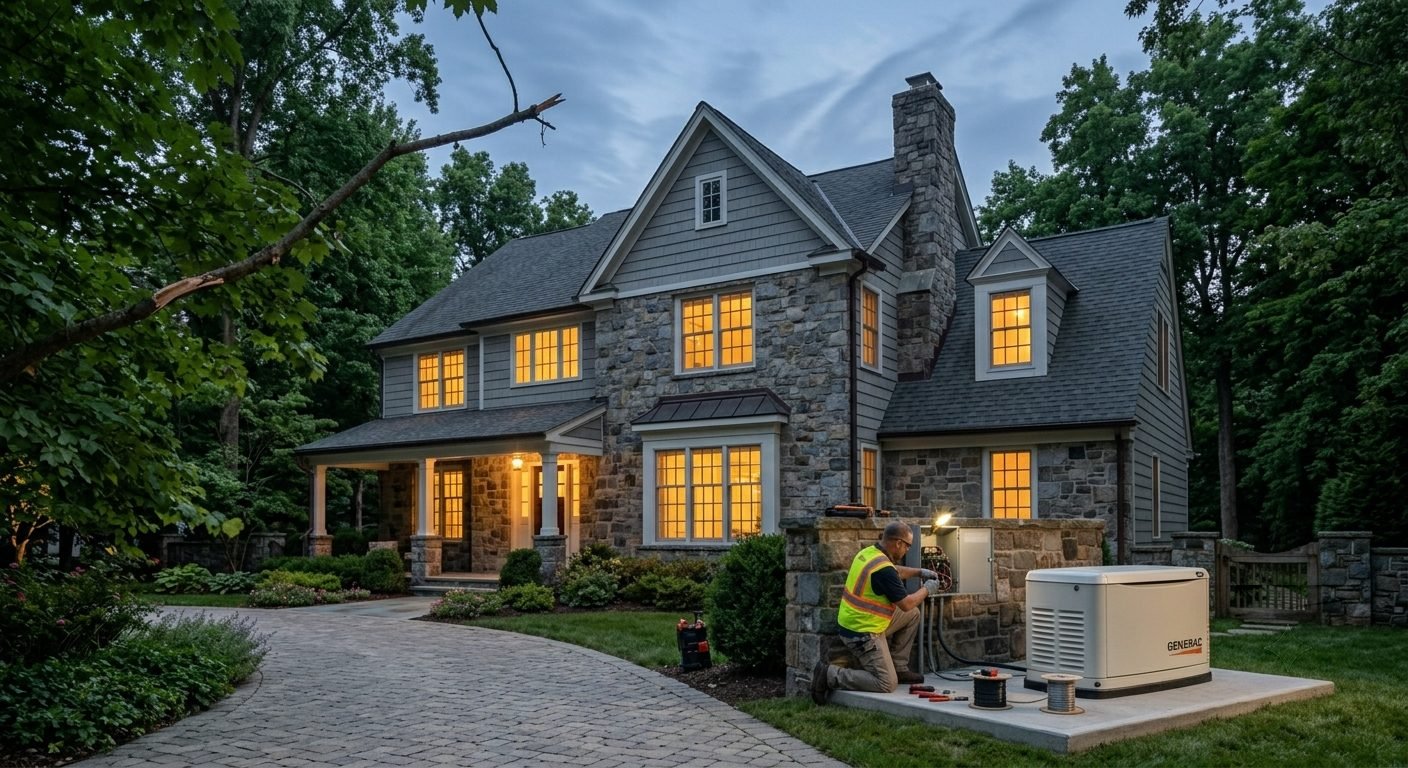
Standby generator and transfer switch installation across Westchester and Putnam. When a storm takes the lines down, your heat, well pump, and refrigerator keep running without you touching a thing.
A standby generator starts itself when the power drops and runs on natural gas or propane. A portable generator costs less but has to be rolled out, fueled, and connected by hand. Both need a transfer switch to feed your panel safely. Which one makes sense depends on your budget and how often you lose power.
Outages in Westchester and Putnam mostly come with weather: summer storms, ice, and the wind that follows. Homes on well water feel it hardest, because losing power also means losing water. That's usually what pushes a household from thinking about a generator to installing one.
Our part of the job is the electrical side: the transfer switch or interlock, the circuit selection for what stays on, the inlet or the standby connection, and the inspection. We size everything with a load calculation instead of guesswork, and we coordinate the fuel side with your plumber or gas supplier where the generator needs it.
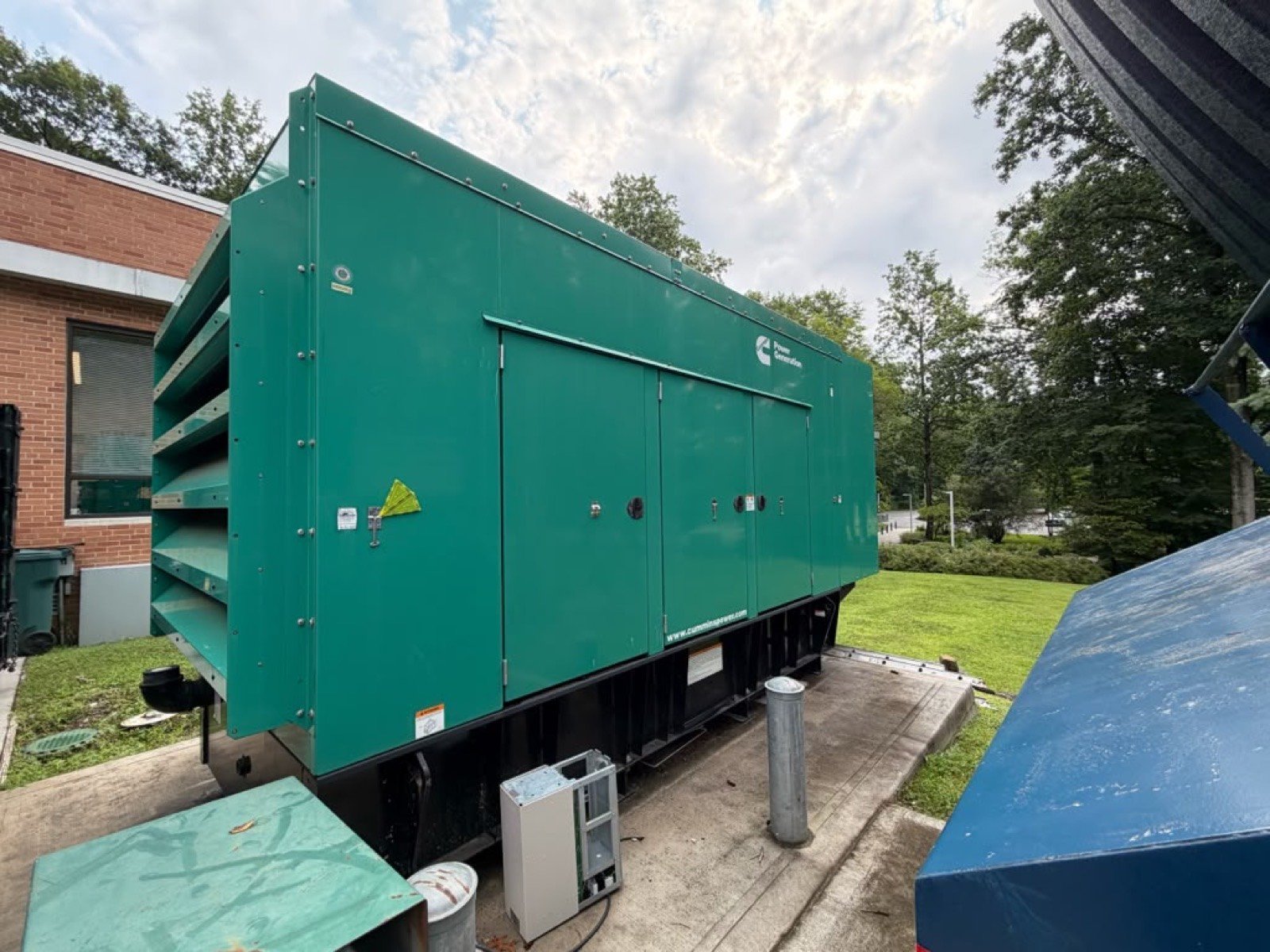
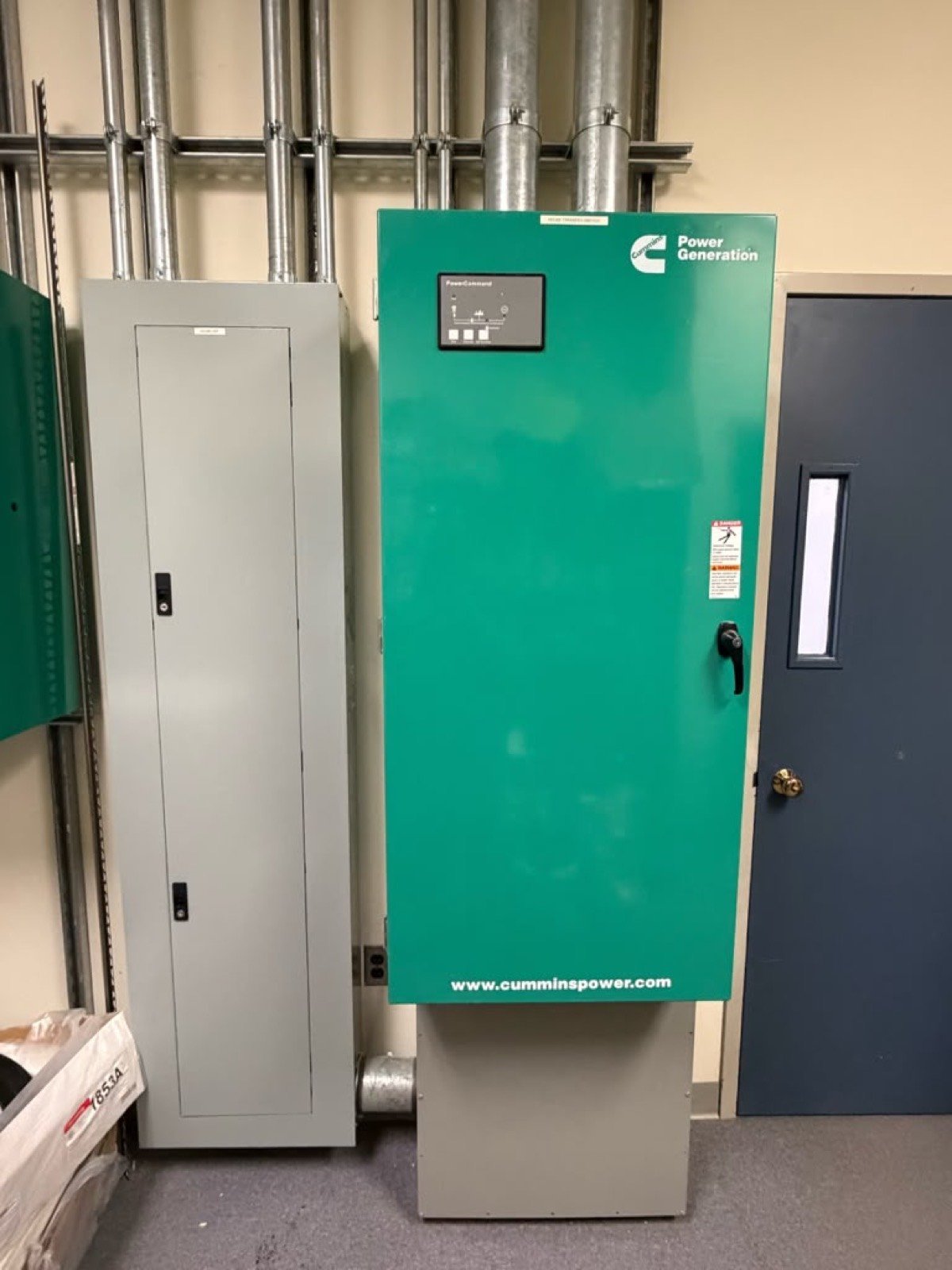
Yes. A transfer switch safely separates your home from the utility line while the generator runs. Backfeeding a panel without one is dangerous to utility line workers and against code. Every generator we connect gets a proper transfer switch or interlock.
It depends on what you want to keep running. Essentials like heat, the refrigerator, and a well pump take far less capacity than whole-home coverage. We calculate the load during your free estimate and size the generator to match, so you don't pay for capacity you won't use.
Usually, yes. We install an inlet and a transfer switch or interlock so you can connect a portable generator safely instead of running cords through a window. If your setup can't be connected safely, we'll tell you that too.
Free estimates, honest answers, work that meets and exceeds code on every job.